
Intelligent moves

Every day, more than 200,000 people migrate to cities forcing urban centers, globally, to go vertical. But as cities are building up, are they getting smarter as well?


Every day, more than 200,000 people migrate to cities forcing urban centers, globally, to go vertical. Cities are faced with the task of making urban environments smarter. But at the heart of smart cities are intelligent buildings.


While smart equipment is required for a building to be intelligent, only having excellent elevators, escalators and related solutions is not enough. For urbanites to move smartly in cities, specialized people flow planning and innovative technologies are required.


“The more people we have in buildings, the more intelligent transportation solutions are needed,” says Dr. Marja-Liisa Siikonen, Director, People Flow Planning.


Dr. Marja-Liisa Siikonen leads an international network of traffic planning specialists at KONE, who help customers plan and implement the best possible People Flow® well before a building’s blueprints exist.

LAYING THE GROUNDWORK

For instance, in the world’s second-third-tallest building, the Makkah Clock Royal Tower Hotel in Mecca, Saudi Arabia, the building planning stage continued for more than seven years, and Siikonen’s team provided hundreds of traffic analysis revisions to the client.


Since the venue is next door to Masjid al-Haram, the world’s largest mosque (which accommodates up to two million people), the goal of the customer was to ensure up to 75,000 people exit all seven buildings through the podium in an organized and timely manner every prayer time, five times a day.


In addition to a thorough study of optimum people flow solutions (resulting in more than 320 units of escalators and elevators in the podium and the towers), KONE implemented special group control software with artificial intelligence capabilities to learn and track passenger traffic patterns in order to optimize people flow.

SMART SOLUTIONS

A combination of KONE’s people flow planning solutions and technological innovations have been also used in many recent multipurpose projects (buildings that house a mix of residential and retail with hotel and office space) around the world. The Leadenhall Building, the latest iconic addition to London’s skyline, is a fine example.


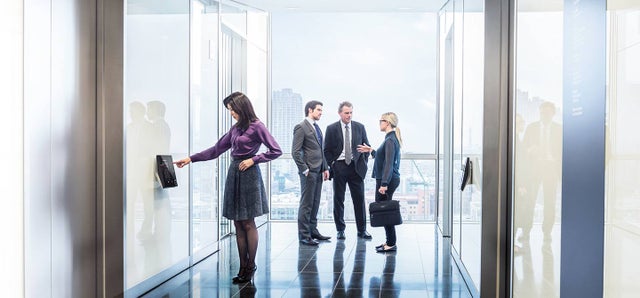
“For multipurpose buildings, KONE’s intelligent control systems such as the KONE Destination allows elevators to prioritize service to certain parts of the building at peak times,” says Siikonen. So, in a mixed-use building (housing a hotel and an office), while majority of hotel guests will likely be away during the daytime, majority of office workers will be present during the day and away at night.

CODING FOR IMPROVED SERVICES

The KONE Destination allocation algorithm searches for the optimum routes for the elevators to serve a destination call. The algorithm is able to identify the best routes for the elevators within milliseconds. Optimal call allocation decisions guarantee short passenger waiting and journey times by using measured stopping times and elevator flight times. The KONE Destination system also forecasts individual passenger journeys.


“When comparing a conventional elevator system to KONE Destination, it could be said that the conventional system is like a bus and KONE Destination is like a dial-a-ride taxi that takes you to your destination floor in the fastest way without unnecessary stops at other floors,” says Siikonen - a smooth ride to the top in a vertical urban reality.

Continue reading

  • Top 5 essentials for a safe and inspiring escalator ride

    Where would we be without escalators? They’re critical to the smooth movement of masses in busy urban settings, but we rarely notice them, much less appreciate the convenience they bring. Let’s take a closer look at the top 5 elements of a perfect ride on this iconic conveyance.
  • Smart elevators keep hospitals in motion 24/7

    Learn more about how KONE's smart elevators keep hospitals in motion, ensuring efficient healthcare connectivity with seamless and intelligent solutions.
  • Using cloud technology to keep critical sites operational in a time of crisis

    Doctors, nurses, assistants and volunteers continue to work tirelessly every day as the impacts of the COVID-19 pandemic spread to increasing numbers of people and communities. At a time of crisis, technology such as KONE 24/7 Connected Services can ease the burden, for example by keeping elevators running smoothly in hospitals and care homes.