
Corporate news

Europe's cities run on completely different clocks, two billion elevator journeys show

October 5, 2026

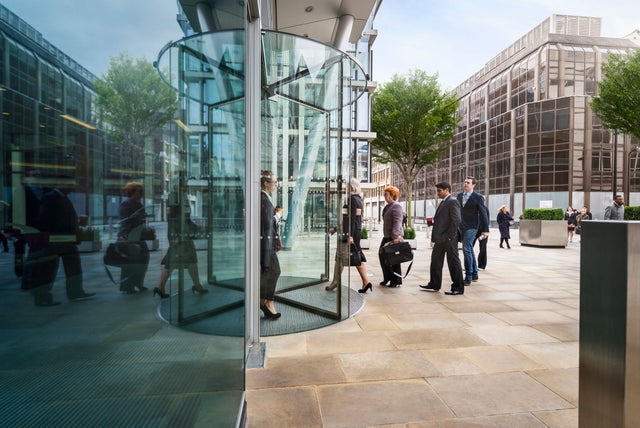
City view with people walking on a street

New analysis of two billion elevator rides across 18 European cities exposes differences in how cities work, rest and play, but Europeans have something in common: infrastructure designed for a bygone era.
 

We have analyzed data from nearly two billion elevator journeys across 18 European cities over the past 12 months offering a real-time, hidden perspective on the differences in how cities work, rest and play, highlighting the pressures on ageing building infrastructure to adapt to evolving urban activity patterns.


While Europeans increasingly live, work and play on different schedules, the buildings they rely on were largely designed around traditional working patterns. With most of Europe's building stock expected to remain in use by 2050, adapting existing buildings to modern patterns of activity will be critical.
 

KONE moves over two billion people on its global equipment every day. Across a growing network of cloud-connected elevators, every journey between floors is counted.


 

 “Our latest data reveals the diverse ways in which people use buildings across European cities. What they have in common is that they rely on old building infrastructure, most of which is expected to remain in place in 2050 and required to sustain changing or evolving habits. Our insights highlight the need to modernize buildings to continue to serve residents safely, comfortably and efficiently and to help cities function in the future”, said Karla Lindahl, EVP, Europe at KONE.”

Technology advancements continue to facilitate quicker modernization of elevators inside buildings, and this is catalyzing rapid urban transformation. We can upgrade the essential elevator infrastructure even in one week now to minimize disruption and maintain cities’ activity rhythms.”

Elevator journeys: the urban activity pattern

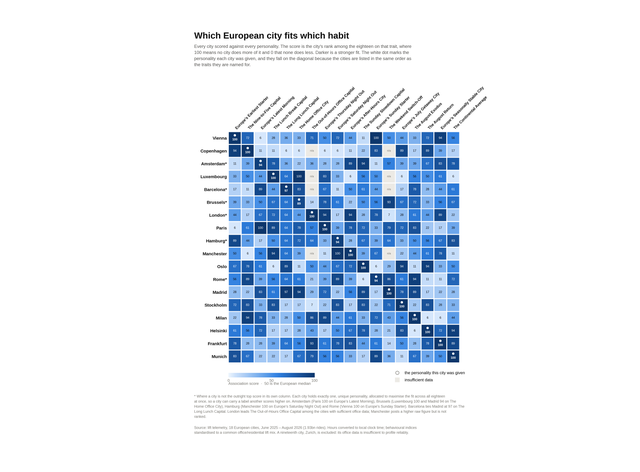
Detailed information on city personalities base on elevator data Open image in new tab to enlarge.

Manchester: The after-hours city

According to the analysis, Manchester is Europe’s after hours city with more than 4% of all elevator rides happening between midnight and 4am, around twice the European average and the highest of any city studies. Its daily rhythm also runs later than anywhere else in Europe.


London: The extended workday

London's office buildings are the most persistently active in Europe. 17% of all office-elevator rides happening in London take place outside standard working hours. Among major European office elevator fleets, no city shows a stronger level of out-of-hours workplace activity.​


Luxembourg and Barcelona: Two very different productivity models

Luxembourg records Europe’s most pronounced lunchtime rush, with elevator activity surging 43% above surrounding hours. In a city where 80% of journeys take place in office buildings, the lunch break still matters.​ By contrast, lunch starts later and lasts longer in Barcelona than anywhere else in Europe. Activity peaks at 2pm and remains elevated for four straight hours.
​

Vienna and Amsterdam: The productivity window gap

Vienna records the highest share of elevator journeys between 5am and 8am and the earliest average morning ride time of any city analyzed.​ Amsterdam sits at the opposite end of the spectrum. Its first movements of the day tend to come later. The average morning elevator ride takes place at 9:09 am, one of the latest in Europe, and the city does not reach a quarter of its daily activity until 11am.
 

Oslo and Rome: Sunday at opposite ends

Sunday mornings divide Europe's cities more sharply than any other time of the week. Oslo is Europe's slowest starter on a Sunday. Just 7.2% of elevator rides take place before 10am, the lowest figure recorded, and the city does not reach a quarter of its daily activity until 1pm.​ Rome presents the mirror image: Almost 12% of Sunday elevator rides happen before 10am, and it is the only city to reach a quarter of its daily Sunday activity by 11am. 
 

Brussels: The new shape of home

Brussels offers a compelling portrait of the post-pandemic working week. Midday residential elevator activity in Brussels slightly exceeds its traditional commuting peaks, with 40% of weekday residential journeys taking place between 10am and 4pm, suggesting home remains a major workplace.
 

Milan and Stockholm: The great escapes

No city empties out quite like Milan. Elevator activity in August falls to 47% of Milan’s normal month. This is the sharpest seasonal drop seen across Europe. Whereas, Stockholm takes its summer break earlier than most. Activity drops by nearly a third in July before rebounding to almost normal levels in August.​​
 

Paris and Hamburg: Europe’s Thursday and Saturday nights out

In Paris, Thursday and Friday nights are almost indistinguishable, with activity levels separated by just 2%. Across Europe, Friday is typically the clear winner. By contrast, in Hamburg, Saturday night elevator traffic is 21% higher than its average night-time activity and comfortably exceeds Friday levels.​
 

Munich and Frankfurt: Europe’s most typical and consistent cities

Across the behavioral measures, Munich sits closer to the European average than any other city, making it the continent’s most representative urban rhythm.​ Frankfurt shows shows the least seasonal variation of any city analysed, making it the most predictable urban rhythm in the dataset.
 

Madrid: The weekend switch-off

Madrid's office buildings are the most rigidly weekday-oriented in Europe. Just 2.4% of office-elevator journeys in Madrid take place at weekends, the lowest share of any city analyzed and a sign of clear separation between work and leisure time.​
 

Helsinki: The August Return

Finland also takes its holidays in July, so August is Helsinki's return-to-work month, busier than the annual average. Summer activity falls just 6%, the smallest dip recorded, also suggesting that Finns are more likely to enjoy a staycation in August.
 

Copenhagen: The 9-5 capital

Copenhagen keeps the most traditional working-day schedule in Europe, records the sharpest morning and evening commuting peaks.


About KONE 


At KONE, our purpose is to shape the future of cities. As a global leader in the elevator and escalator industry, we move two billion people every day, making their journeys safe, convenient, and reliable with smart and sustainable People Flow®. In 2025, KONE had annual sales of EUR 11.2 billion, and at the end of the year over 60,000 employees in close to 70 countries. KONE class B shares are listed on the Nasdaq Helsinki Ltd. in Finland.
 

www.kone.com