
Explore our offering
New elevators and escalators Service ModernizationYou might be interested
Major projects KONE Remote Service Predictive maintenance Solutions for greener buildings myKONE
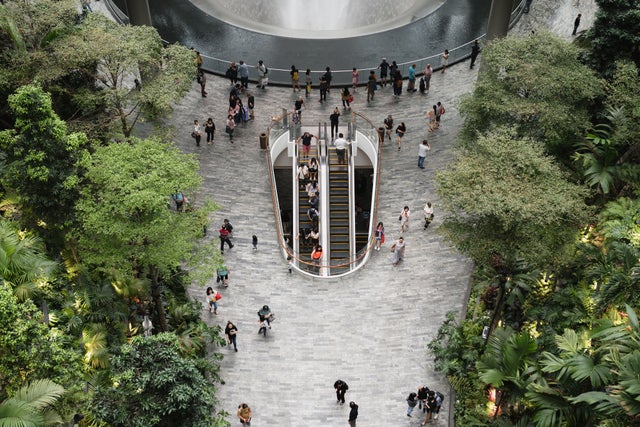
Retrofitting or repurposing buildings to make them more energy efficient and livable is crucial for addressing the climate emergency through reaching net zero carbon emissions. The EU’s “renovation wave” target is a clear step forward – but it can and should go further.
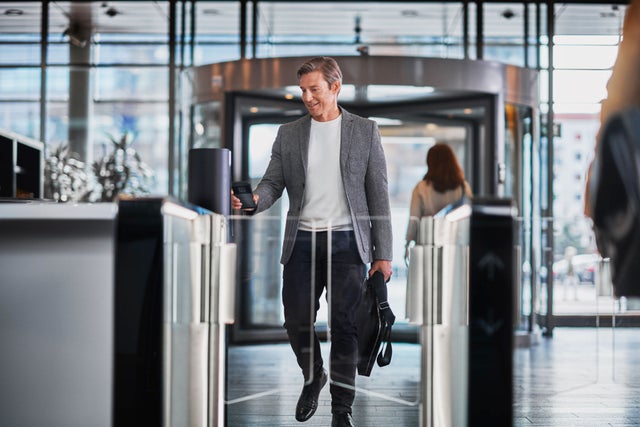
Successful modernization requires adapting the building's people flow to meet the changing needs of its users.

The European Commission launched its Green Deal “renovation wave” in 2020 to help fight climate change and reach net zero emissions by the middle of the century. It is a policy aimed at boosting the number of buildings that receive a makeover of their energy efficiency and eco-performance, and is one of the measures to meet the obligations of the Paris Agreement – a global pact to limit temperature rise to well below 2°C.

The renovation wave sets a target of increasing EU building modernization projects from 1% to 3% per year. It is a significant step, but Hanna Uusitalo, KONE’s Head of Circularity Development, argues that much more can be done.
“The need is there and the will, and the resilient supply to go with it,” Uusitalo says. “We should be talking about increasing the percentage of building modernization projects to as much as 7% to 10% annually.”
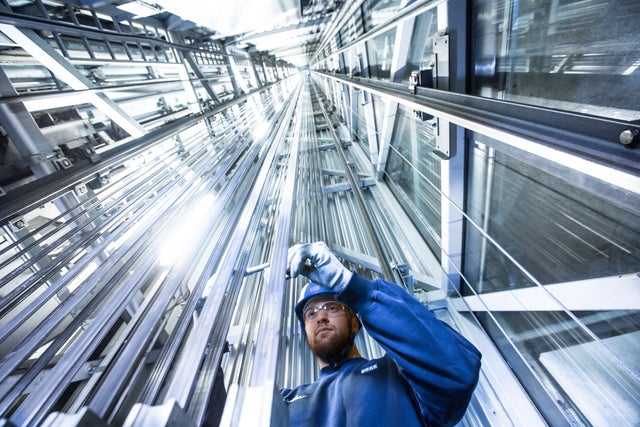
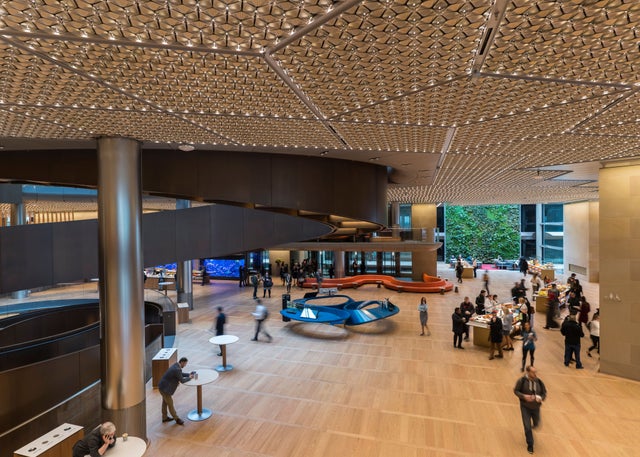
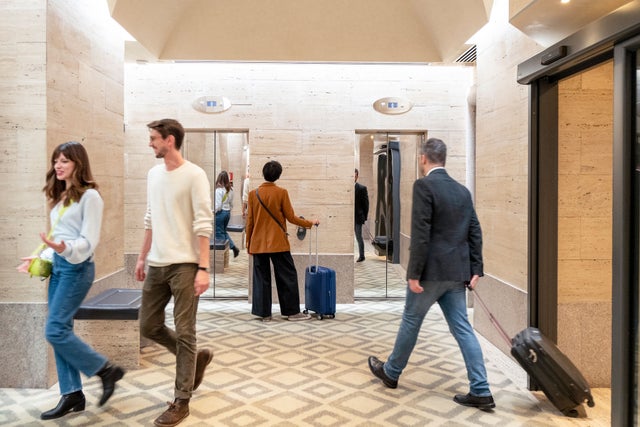
Uusitalo points out that modernizing buildings is about more than just reducing their energy consumption. It’s about modernizing buildings to put people first. Improving the people flow within a building by retrofitting its elevators means it can better serve its users long into the future and avoid becoming obsolete, such as in this Madrid office block.
The case for more modernization is clear. Buildings contribute substantially to the greenhouse gas emissions that cause climate change, accounting for 40% of Europe’s energy consumption. Three-quarters of this energy is produced during the building’s operations and the rest in the manufacturing of construction materials.
What’s more, Uusitalo cites a 2017 study which found that as much as 97% of Europe’s existing building stock needs an energy-efficiency upgrade.
Cities can only become carbon neutral by renovating and retrofitting existing buildings.
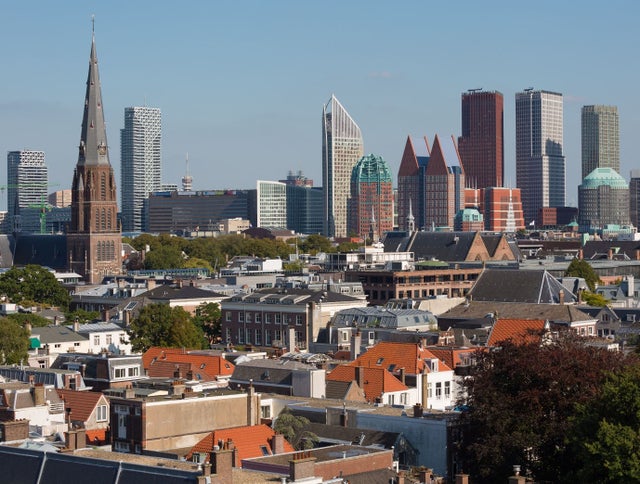
Ruben Zonnevijlle, Program Manager at the Dutch Green Building Council (DGBC) agrees with the urgency for more modernization. He also believes that the EU Green Deal needs to go further if the European Commission is to meet its target of reducing greenhouse gas emissions by the end of the decade to at least 55% of 1990 levels.
Nonetheless, he sees the direction of travel as positive.
“It is a wave,” Zonnevijlle says, “that will start off gradually on many levels, then eventually accelerate.” Initially, there will be a lot of challenges to implementing the policy, not least enforcing the law at country levels. To help tackle the rollout of energy-efficient renovation policies, the World Green Building Council is creating roadmaps and tools, such as strategies to “Paris-proof” a building, and sustainability assessments.
The good news is that the future cities of 2050 have already been built. “Around 80% of the buildings we have today will still exist in 2050,” Uusitalo says. “Now all we have to do is make them smarter, cleaner and carbon neutral. We have to modernize and repurpose, to bring the existing onto a par with the new.”
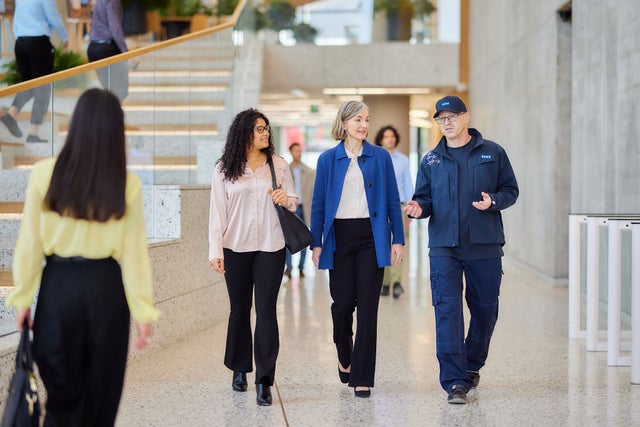
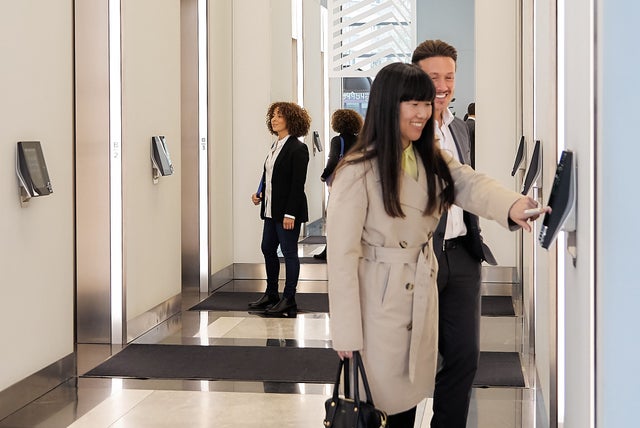
Successful modernization and repurposing of buildings begins with understanding, updating and optimizing people flow and accessibility. "Smart readiness is about putting people at the center of the modernization – so working together to first understand people flow in offices, hospitals, hotels, leisure facilities – in hubs which are connecting people.”
The renewal of Boston’s TD Garden sports arena in the USA is a case in point, where the modernization involved a host of smart people flow solutions, making the building suitable for the changed needs of modern visitors.
Smart and energy-efficient solutions play an essential role in sustainable building modernization.
Ruben Zonnevijlle, Program Manager at the Dutch Green Building Council (DGBC) agrees with the urgency for more modernization. He also believes that the EU Green Deal needs to go further if the European Commission is to meet its target of reducing greenhouse gas emissions by the end of the decade to at least 55% of 1990 levels.
Nonetheless, he sees the direction of travel as positive.
“It is a wave,” Zonnevijlle says, “that will start off gradually on many levels, then eventually accelerate.” Initially, there will be a lot of challenges to implementing the policy, not least enforcing the law at country levels. To help tackle the rollout of energy-efficient renovation policies, the World Green Building Council is creating roadmaps and tools, such as strategies to “Paris-proof” a building, and sustainability assessments.
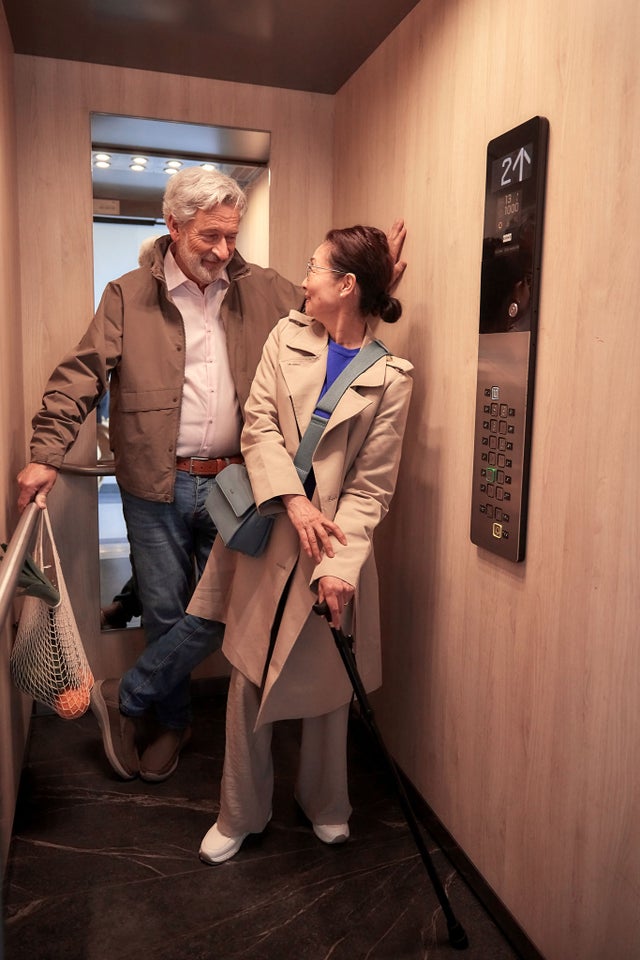
One innovative way that KONE elevators reduce emissions as part of building modernization is through the addition of regenerative drives that capture and store energy that would otherwise be wasted, and re-use it to power the motor. Systems are also getting smarter. Elevators can optimize energy use by adjusting based on factors like occupancy and time of day. Advanced algorithms can also group passengers going to the same floor, reducing the number of stops and minimizing operation time.
Zonnevijlle also praises closed-loop operations from manufacturers like KONE, offering “products as service” with predictive maintenance and end-of-life component replacement. This contributes to energy efficiency and the development of a circular economy, for example by recovering valuable materials from upgrades and recycling or repurposing them into new or existing value chains.
Meanwhile reducing kilowatt usage in a building requires the widespread use of equipment like solar panels and heat pumps, or upgrading heating, ventilation and air-conditioning (HVACs). “These extra materials all have to be manufactured, which in itself generates more emissions, so-called embodied-carbon emissions,” Zonnevijlle explains.
But given that existing buildings have already consumed significant amounts of embodied energy during their original construction, renovation rather than demolition and building anew is generally the lower-emission choice by far, making it a necessary step towards a sustainable and climate-friendly future.
No Results Found