Explore our offering
New elevators and escalators Service ModernizationYou might be interested
Major projects KONE Remote Service Predictive maintenance Solutions for greener buildings myKONE
Safer escalator journeys with KONE’s AI video solution
Busy public spaces like airports and metro stations face constant pressure to keep passengers safe while ensuring efficient passenger flow. At KONE, we combine real-time video feed and artificial intelligence, AI to support building operators in this task – making everyday journeys safer, smoother, and smarter.
It could happen to anyone. You are running late and rushing through the airport, desperate not to miss your flight. You do what you know you shouldn’t: instead of taking the elevator, you race up the escalator, dragging your oversized luggage with you. Your giant suitcase gets caught between the steps and you fall.
This common, yet embarrassing and potentially dangerous incident could have been prevented with KONE’s Escalator Video Monitoring service.
“Accidents happen if we do not pay attention,” says Martti Juurioksa, KONE’s head of escalator and infrastructure offering, Major Projects and Escalators. “And incidents are more likely to happen if we aren’t using the equipment properly. A study by the Building and Construction Authority in Singapore discovered 97% of escalator incidents were due to user behavior. Our solution uses real-time video feed and artificial intelligence, AI to detect potential mishaps. It alerts users to prevent incidents and notifies building personnel if needed, so they can also act quickly.”
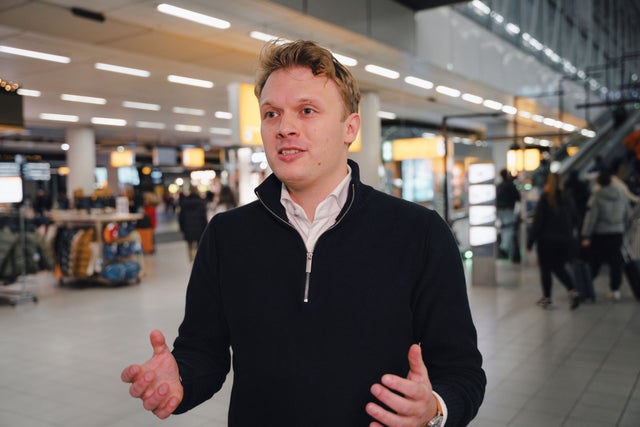
Sjoerd van Kampen, asset manager at Amsterdam Airport Schiphol, is part of a collaborative effort with KONE to pilot innovative AI technology aimed at improving passenger flow.
The KONE Video Monitoring service for escalators has been developed over several years and is now being used at Amsterdam Airport Schiphol (AMS), the Shanghai Children’s Hospital, and the Shenzhen Metro in China.
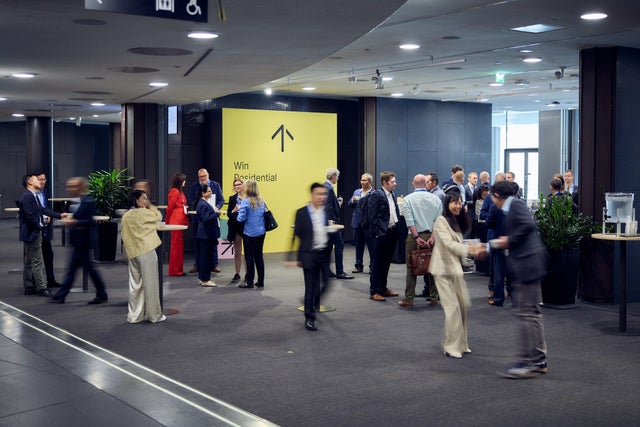
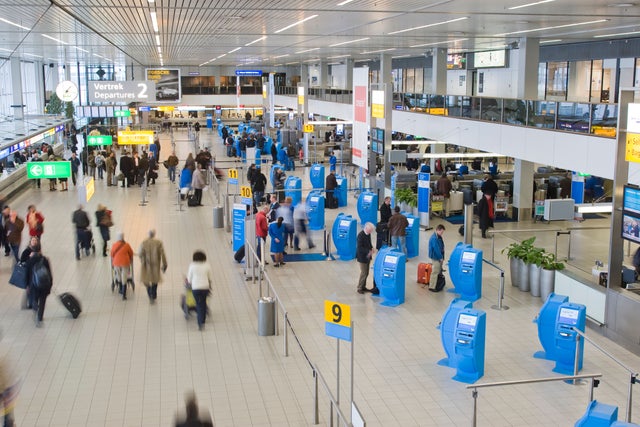
In Amsterdam, elevators, escalators, and autowalks are essential for helping passengers move safely and efficiently through Schiphol’s 1.3 million m2 terminal. A single trolley incident can potentially disrupt the journey of thousands.
“In the past, our escalators faced frequent unplanned stops due to unexpected passenger behavior at the airport,” explains Sjoerd van Kampen, asset manager at Amsterdam Airport Schiphol. “To address this, we partnered with KONE to pilot smart solutions that could help us better understand and manage these situations.”
The video monitoring system helps ensure escalators stay up and running, supporting a smoother passenger journey.
“With this solution, our goal is to reduce the risk of accidents, keep the machines running smoothly, improve the overall passenger experience, and lower the costs.”
The KONE Video Monitoring service for escalators has been developed over several years and is now being used at Amsterdam Airport Schiphol (AMS), the Shanghai Children’s Hospital, and the Shenzhen Metro in China.
In Amsterdam, elevators, escalators, and autowalks are essential for helping passengers move safely and efficiently through Schiphol’s 1.3 million m2 terminal. A single trolley incident can potentially disrupt the journey of thousands.
“In the past, our escalators faced frequent unplanned stops due to unexpected passenger behavior at the airport,” explains Sjoerd van Kampen, asset manager at Amsterdam Airport Schiphol. “To address this, we partnered with KONE to pilot smart solutions that could help us better understand and manage these situations.”
The video monitoring system helps ensure escalators stay up and running, supporting a smoother passenger journey.
“With this solution, our goal is to reduce the risk of accidents, keep the machines running smoothly, improve the overall passenger experience, and lower the costs.”
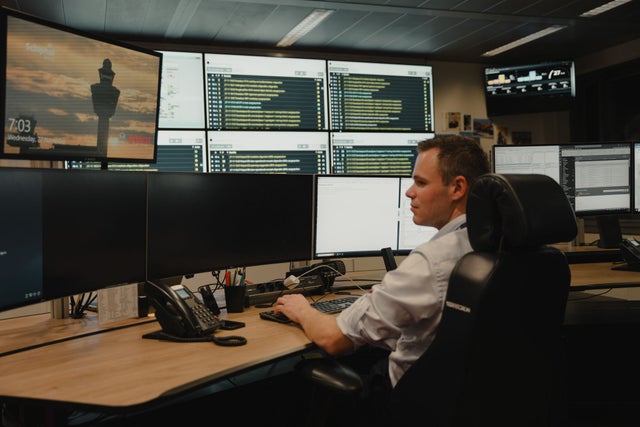
The system monitors escalators and autowalks, notifying building personnel if their intervention is needed.
According to Rens Kamerling, innovation manager at Amsterdam Airport Schiphol, close collaboration has made it easy to improve the solution step by step.
Developing this smart system in collaboration has brought together experts from KONE, Amsterdam Airport Schiphol and other partners in multiple countries.
“This is an innovative partnership,” says Rens Kamerling, innovation manager at Amsterdam Airport Schiphol. “We provide real-world use cases and detailed input that helps KONE fine-tune their system. We intend to be a world frontrunner in airport innovation – just like KONE wants to be the frontrunner in people flow.”
A collaborative innovation process has made it possible to steadily improve the solution.
“During testing, we realized we need high-quality cameras for the AI,” Kamerling says. "We've tackled many small challenges together."
The experts of KONE and Amsterdam Airport Schiphol will keep working together to make the journeys through the airport better. Traveling can be stressful, so it is important to find ways to improve the passenger experience.
“Our ambition is to make Amsterdam Airport Schiphol an increasingly autonomous airport. In the future, we want to connect the solution with other equipment such as elevators and digital information boards,” van Kampen says. “The solution could be part of the airport’s digital wayfinder display system, provided by KONE, giving passengers the right information and helping them navigate the terminal more smoothly. This could ease their state-of-mind and make travel a more pleasant experience.”
Artificial intelligence is the backbone of KONE’s new solution. As a newer technology, it needs to be treated carefully from both regulatory and commercial standpoints. In high-traffic environments like airports, technological solutions must also be cyber secure.
“Our video monitoring solution always follows local laws and regulations, such as automatically blurring faces to maintain privacy,” Martti Juurioksa explains.
In the future, KONE’s AI-powered solution could also improve a building’s sustainability and reduce energy costs. Juurioksa explains that the capability to accurately count people and objects can be used to develop an AI-powered escalator system that reacts to real time demands for people and material flow. For instance, if it sees many people exiting a train onto a metro platform, it could automatically start all the escalators. With fewer people, it could only start one. This kind of intelligent automation optimizes energy use, reduces unnecessary wear and tear, extends escalator lifespan, and saves maintenance costs.
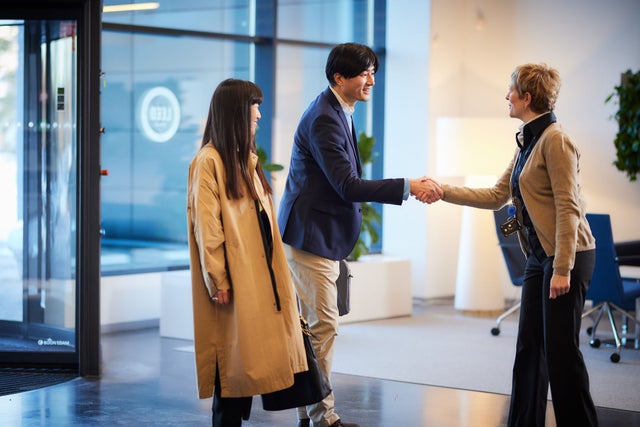
The KONE Video Monitoring solution isn’t limited to escalators and autowalks – it can be applied to elevators, moving walkways, entrances, stairs, or other areas within buildings.
“The AI can be taught to look for a wide range of potential scenarios. It could watch how objects are moved around warehouses or keep stats on how luggage carts are used in airports. It also integrates with other KONE solutions, or even with third-party equipment.”
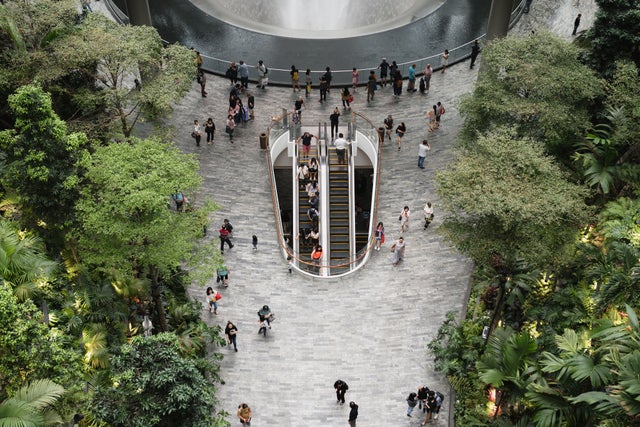
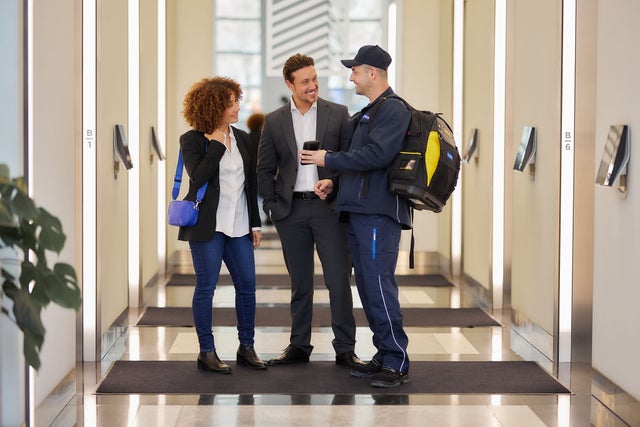

In the future, KONE’s AI-powered solution could help terminals optimize escalator and elevator use with real-time data.
No Results Found