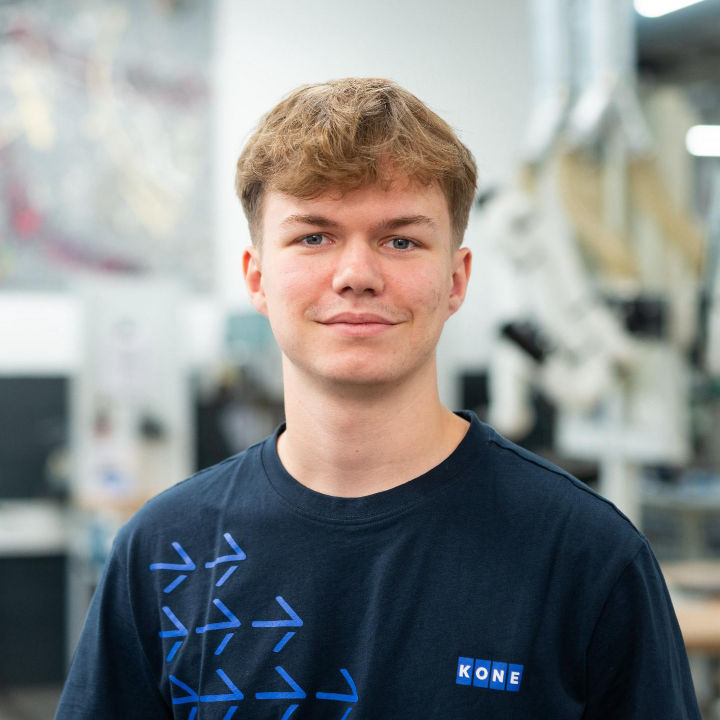
For Kilian Torney, 21, KONE has been familiar since his childhood; it was (and still is) the company his father worked for. So, when Kilian had a “Future Day” in secondary school – a day that the pupils spend getting acquainted with work life – Kilian spent the day at his father’s workplace, the KONE Academy in Hanover, Germany.
The experience was interesting, but at the time, Kilian was not thinking that he would be working for KONE in the future. That thought came to him a couple of years later when he was in high school.
“I’m interested in both the practical and the theoretical, but I enjoy practical work the most. I wanted to have a job where I can do things with my own hands.”
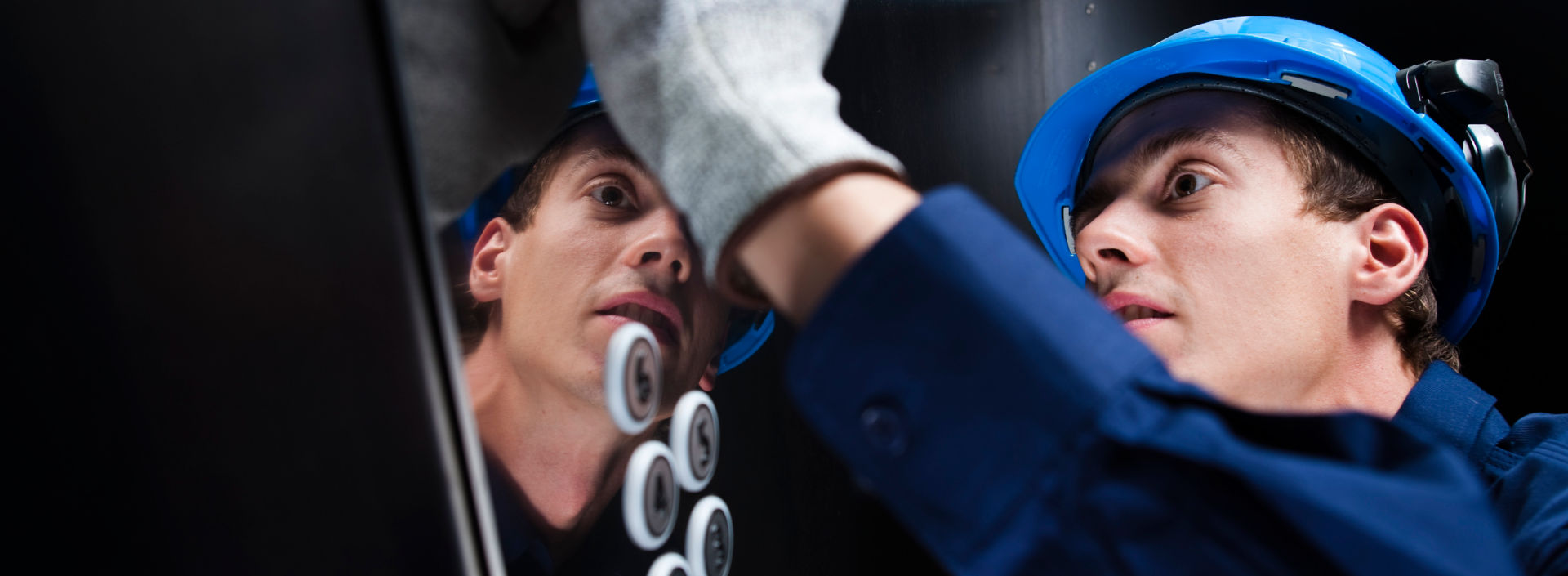
Kilian is now in his second year of his mechatronics technician apprenticeship program. The most important part of the education is learning on the job, and this Kilian is doing as a trainee with KONE. He spends his apprentice days with experienced service technicians who show him the tricks of the trade.
“I’ve spent a lot of time with different technicians, which has helped me see different approaches to solving problems. We go from elevator to elevator, checking if they are working normally and finding solutions if they are not. This experience has been very valuable for my learning.”
Kilian has been positively surprised by how independent the role of a technician can be.
“In a way, you are your own manager – you plan your own work schedules, and you need to find the solutions yourself.”
A job that demands every skill in the toolbox
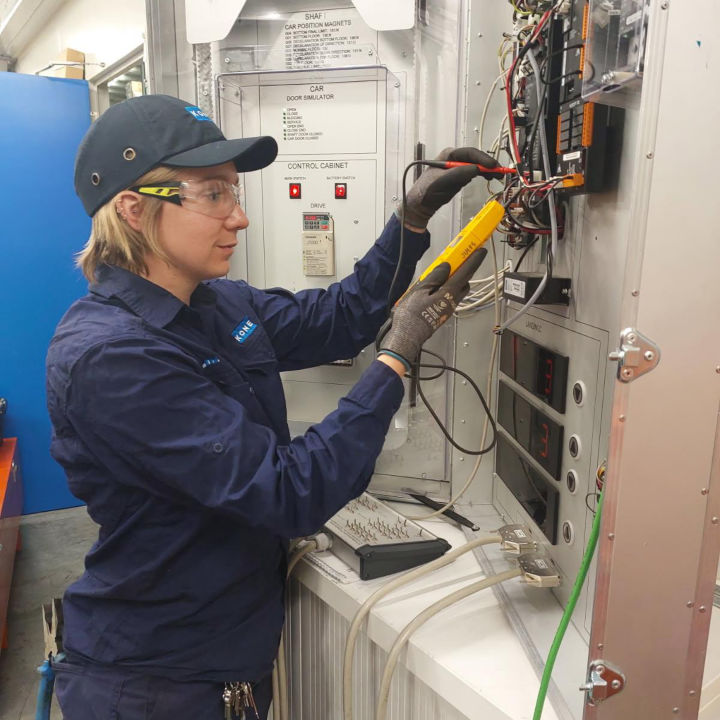
Julia Carbery, 28, is also currently learning the trade in a four-year apprenticeship program in Melbourne, Australia. She spent the first two years with other companies, then joined KONE for the third year and hopes to stay at KONE for the fourth year as well.
Julia had already studied Engineering and Science at the James Cook University in Queensland, but she wanted a job that wouldn’t have her sitting all day.
“I enjoy doing hands-on work and gaining practical skills. I also find it very satisfying seeing tangible results of my efforts. I feel like I’m contributing to my city, for example, by finishing a high rise lift with a beautiful interior that is going to be used by hundreds of people every day for decades to come!”
Julia says the most surprising thing for her has been finding out how many different skills are required from an elevator technician.
“Aside from electrical trade skills, I've also needed to learn mechanical trade skills, steel fabrication, dogging and rigging, basic coding, carpentry, scaffolding, data and telecommunications and more! I found it a little bit overwhelming at first, but if you're up for the challenge, it's extremely rewarding and fun.”
The world of technicians is still very male-dominated. Julia has worked with other companies in the construction industry where she experienced bullying, discrimination, and even sexual harassment.
“But at KONE, it has been fantastic, I really feel like part of the team. I think there is a more professional culture here. It helps that the men, who work out in the field, interact a lot with the office staff, most of whom are women. I think that reminds the men that they have female colleagues as well and it sort of normalizes the interaction.”
“Everything is possible”
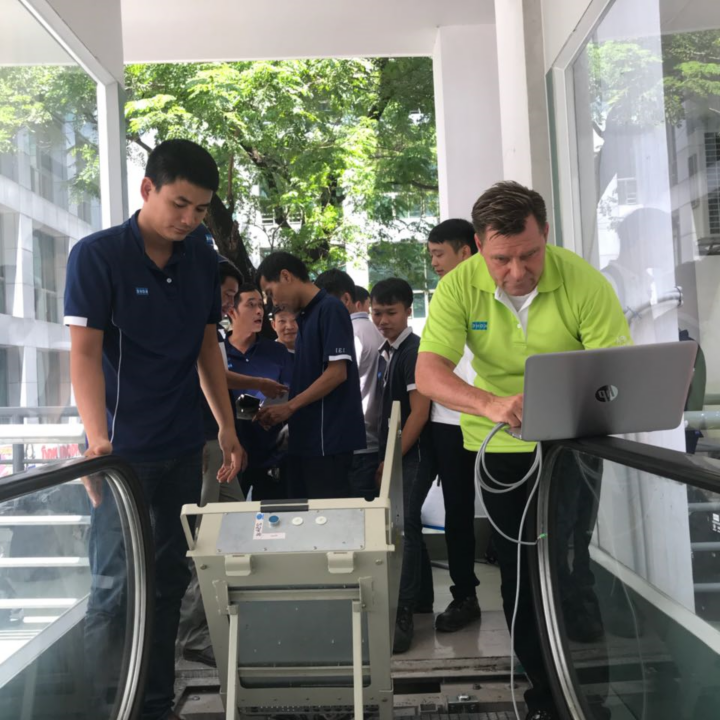
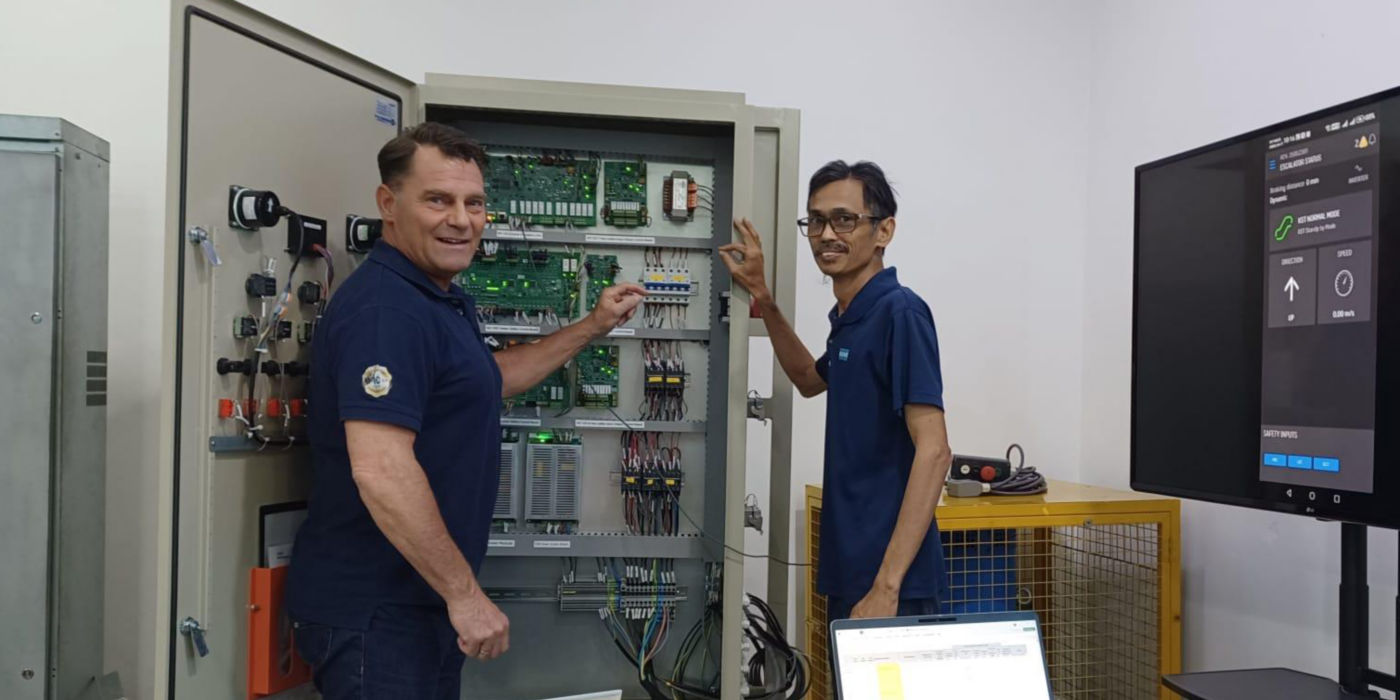
While Kilian and Julia are at the early stages of their careers, Christian Stratmann, 58, senior global expert and field trainer, has several decades of experience behind him.
Christian started in the mid-1980’s at O&K Rolltreppen, a German escalator company that was later acquired by KONE
His career is an example of how it is possible to develop one’s skills and take on new responsibilities within the company. He started as a welder in an escalator factory in Dortmund, went on to become an escalator installer, then maintenance technician and technical specialist.
Eventually, Christian’s role developed more and more into sharing his knowledge to others. He has been responsible for designing and implementing internal training programs – including programs where he trained and developed country trainers.
“It’s easy to grow within KONE. I always tell young people that everything is possible if you continue with your learning and education. You can even apply for positions abroad. I’m settled now, but if I was 20 years younger, I would definitely be working for KONE somewhere outside of Germany.”
More than tech skills
As technology develops and digitalization brings ever new changes, it’s important to be open-minded and willing to learn to use the new digital tools. For the younger generation, this is usually no problem. Julia acknowledges that some people are worried that digitalization and especially AI may take away people’s jobs, but personally, she feels safe.
“Any technological advancements are just making my job easier, and there's always going to be a place for those physical skills in installation.”
As Christian points out, in this line of work, being tech-savvy is not enough – you still do very practical, physical work.
“We are still dealing with mechanics, there are bolts and nuts that you have to tighten and adjust. When I was a kid, I sometimes helped my dad when he was repairing the car, so I learned to use tools already at a young age. Today, not as many young people are experienced with hands-on tools – sometimes I have to explain how the tools are working.”